How Daylight Commons works
What the extension reads, where each sign comes from, what leaves your browser, and how anyone can check a receipt without us.
Updated 2026-10-23.
Daylight Commons is a browser extension. Rest the pointer on a reply on X, Reddit, YouTube, Bluesky, Mastodon and a few other sites, and a window opens beside it. The window shows where the platform places the account, signs of coordination, how the post argues, and who stands behind a linked outlet. Each sign names its source, so you can open it and judge for yourself.
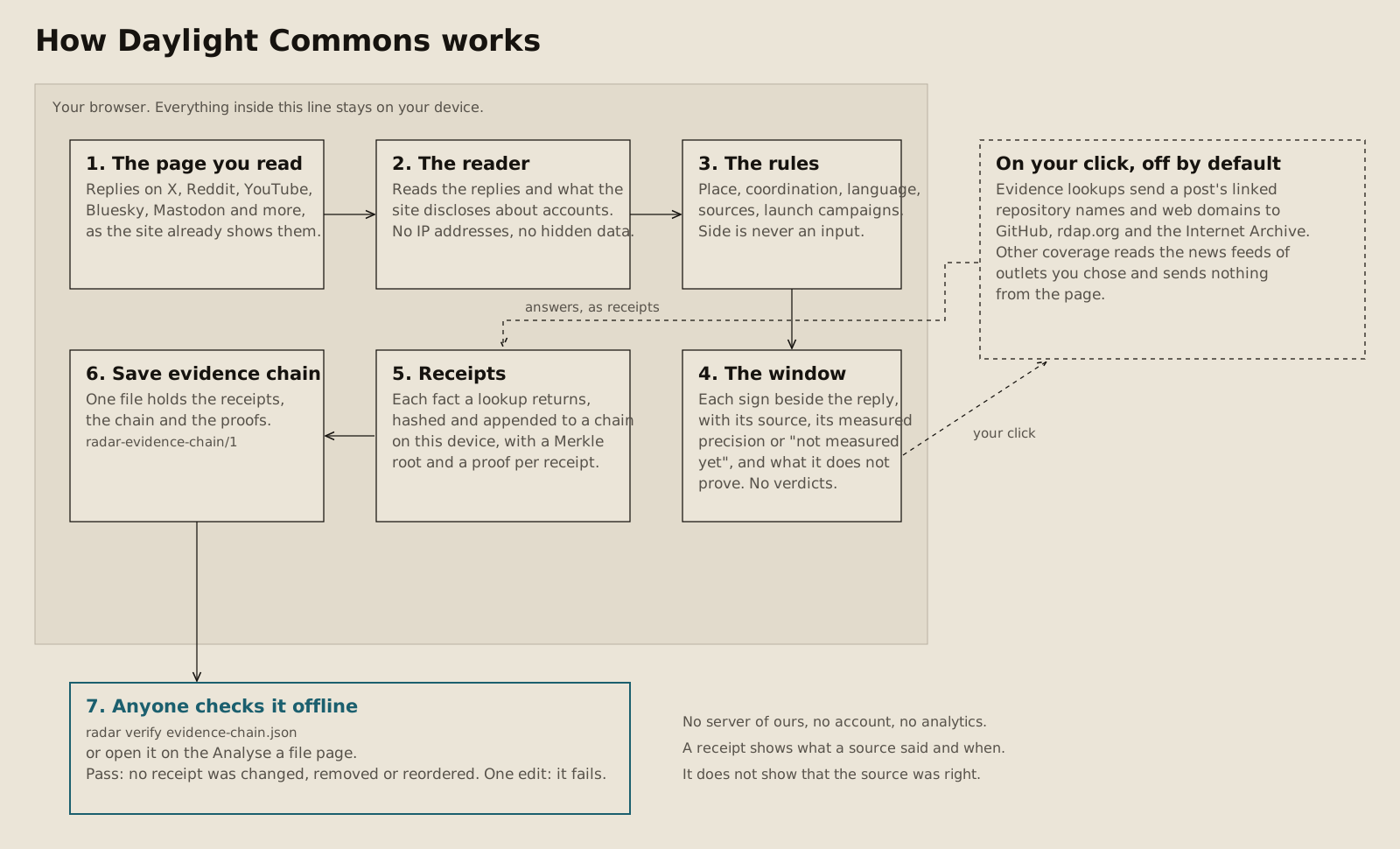
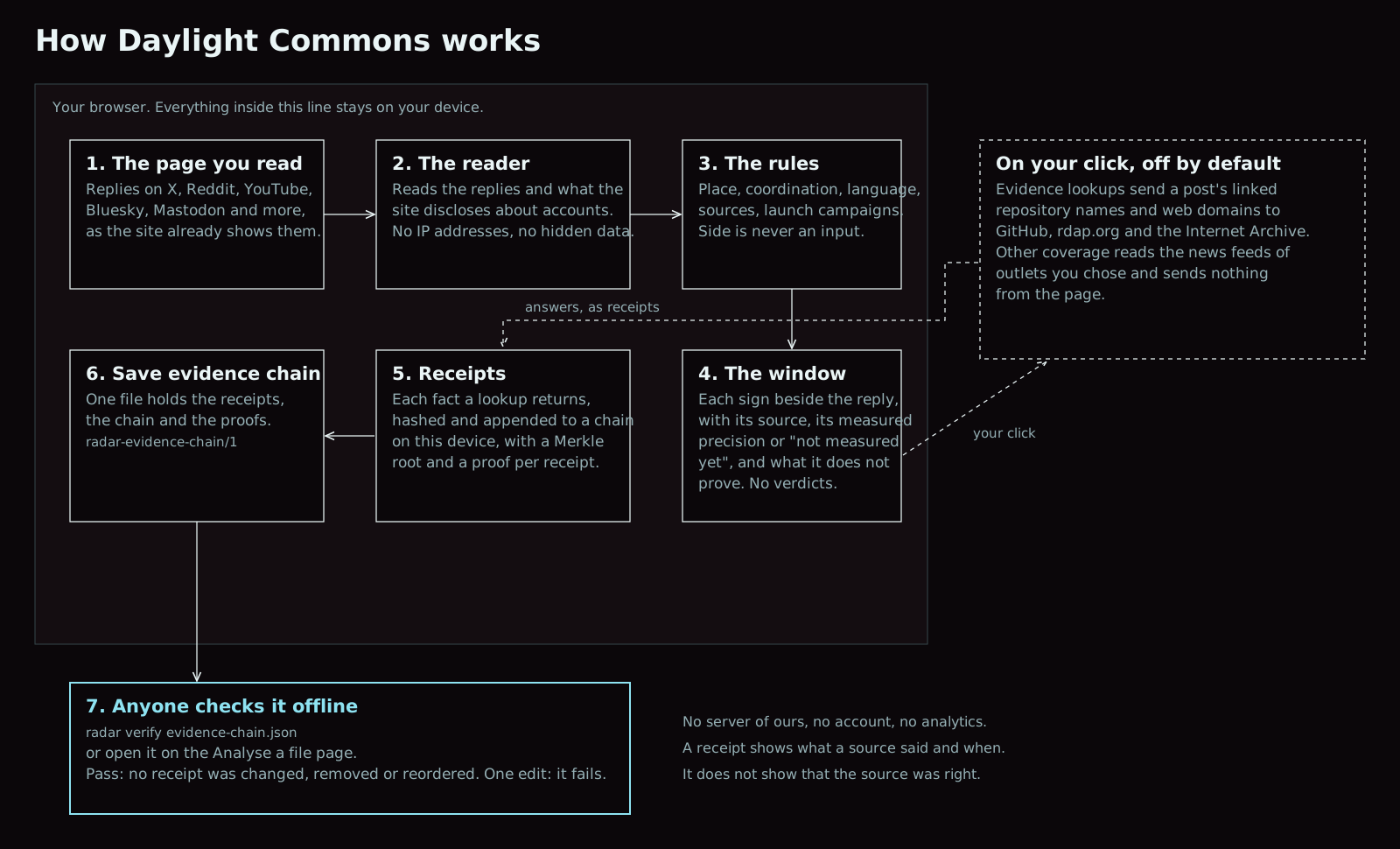
The path a reply takes
Everything up to the window happens in your browser. The reader takes only what the site already shows you, and what the site discloses about accounts. The rules turn that into signs, and the same words count the same whichever side they target.
Two features reach further, and only after you turn them on and click. Evidence lookups send the repository names and web domains a post links to GitHub, rdap.org and the Internet Archive. Other coverage reads the news feeds of outlets you chose and sends nothing from the page. Each says what it sends and to whom before the first use.
Receipts you can check without us
Click an evidence lookup and the answer comes back as a receipt: what the source said, its address, the time, and a hash of the answer. Each receipt joins a hash chain in your browser, with a Merkle root over the chain and a proof for each receipt. "Save evidence chain" downloads the whole chain as one file.
Hand that file to anyone. They can check it offline, with the command line tool or the Analyse a file page inside the extension. Change one receipt, drop one or swap two, and the check fails. A pass tells you the chain is the one this browser recorded. To know whether a source was right, open the source the receipt names.
Watch it
Install, a page, a reply's window, its evidence, a lookup's receipts, and the saved chain checked offline, in under two minutes, on synthetic pages where every account is invented.
What each finding shows
Each still is the installed extension on a made-up page. Every account in them is invented.
Place
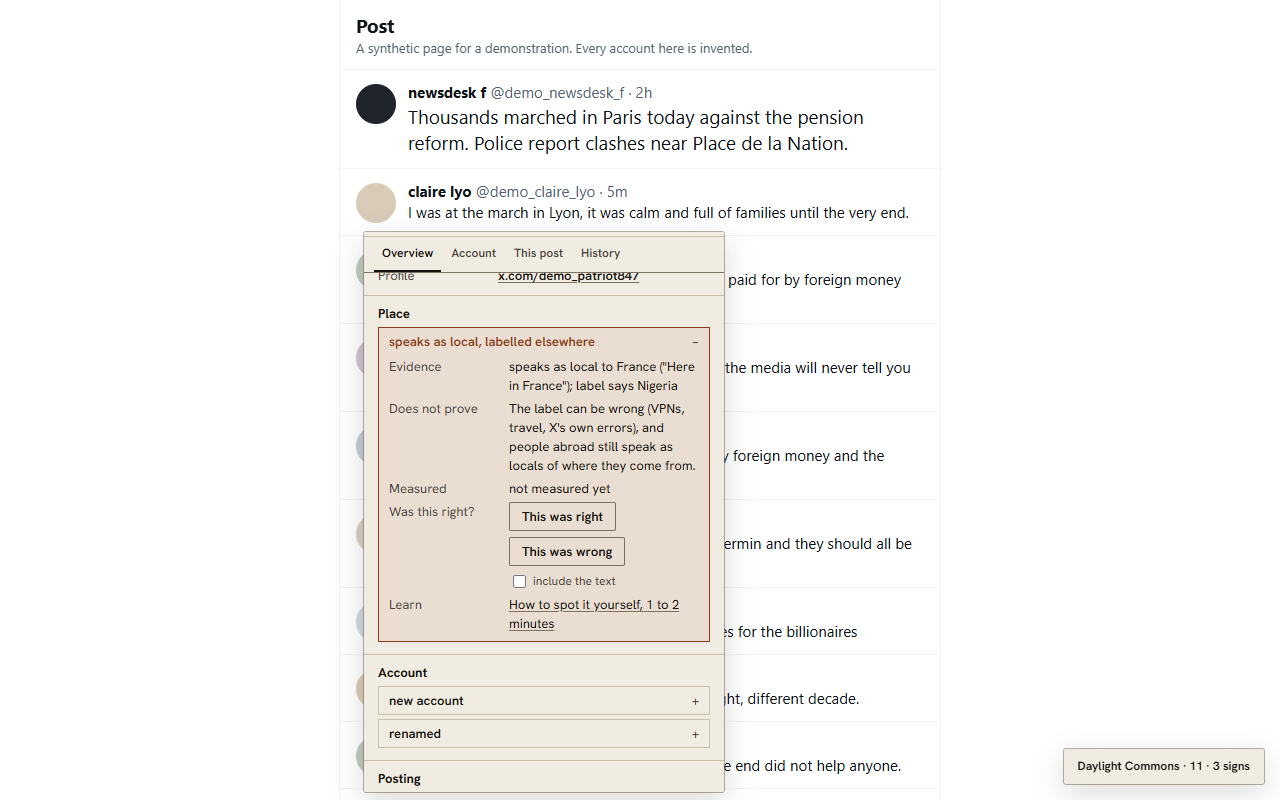
Treat it as a lead. The label follows the connection, so a VPN or a trip moves it, and people abroad still talk about home.
Account
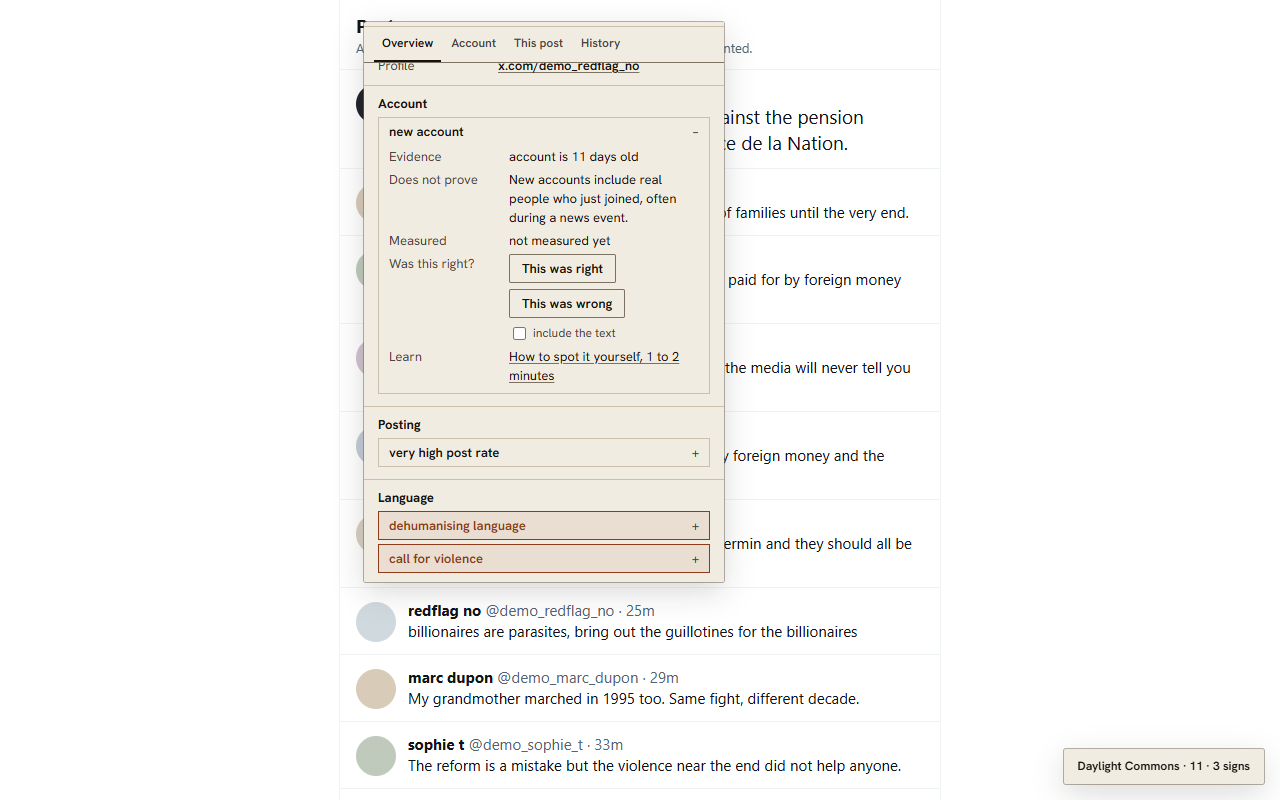
Plenty of real people sign up during a news event, so age is one sign among several.
Posting
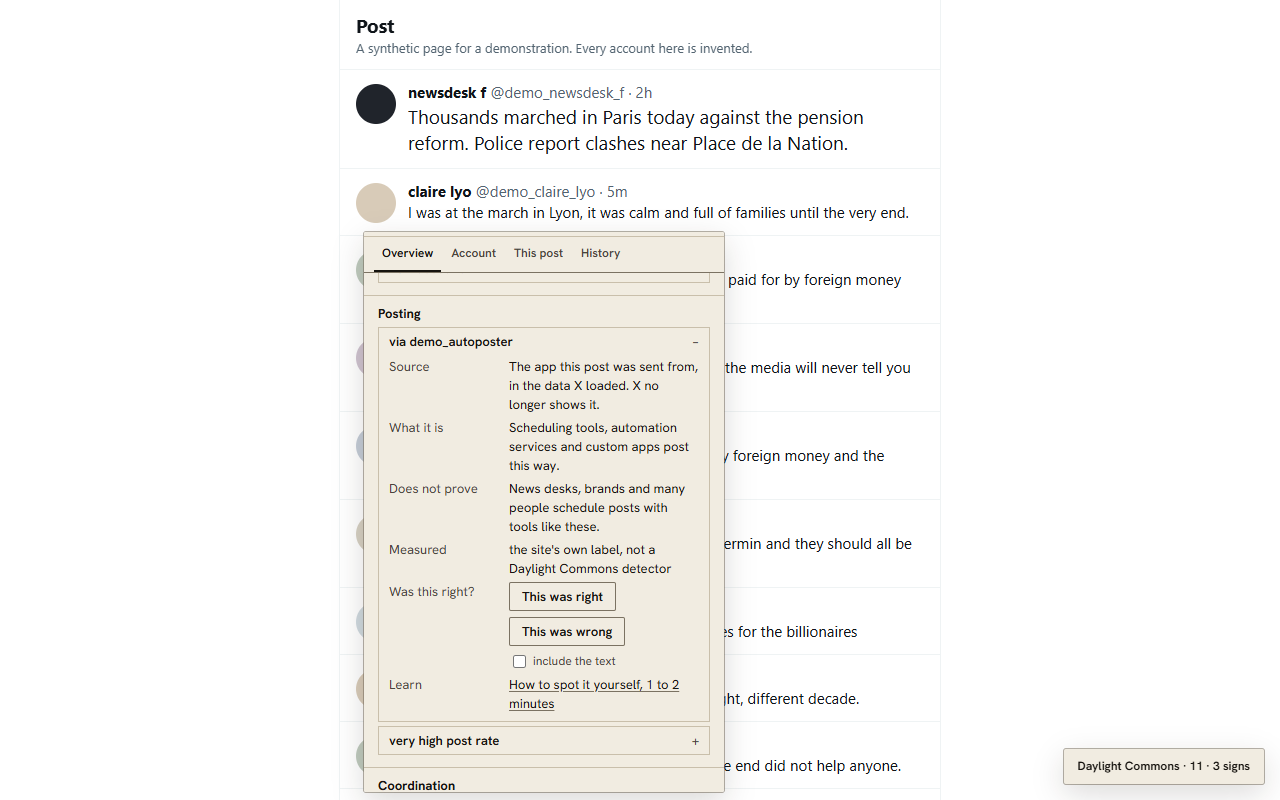
News desks, brands and busy people schedule posts too.
Coordination
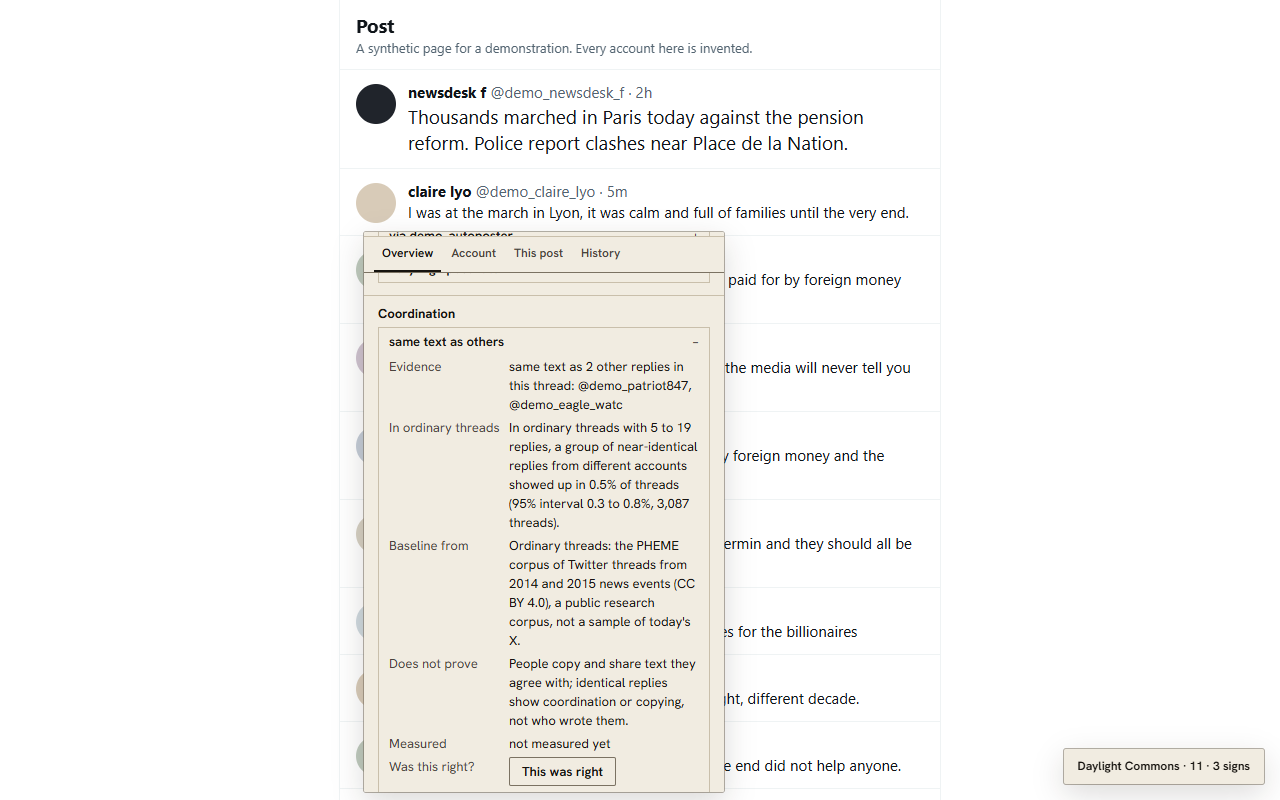
Matching text shows the words were copied. Open the matched accounts to see who sent them.
Language
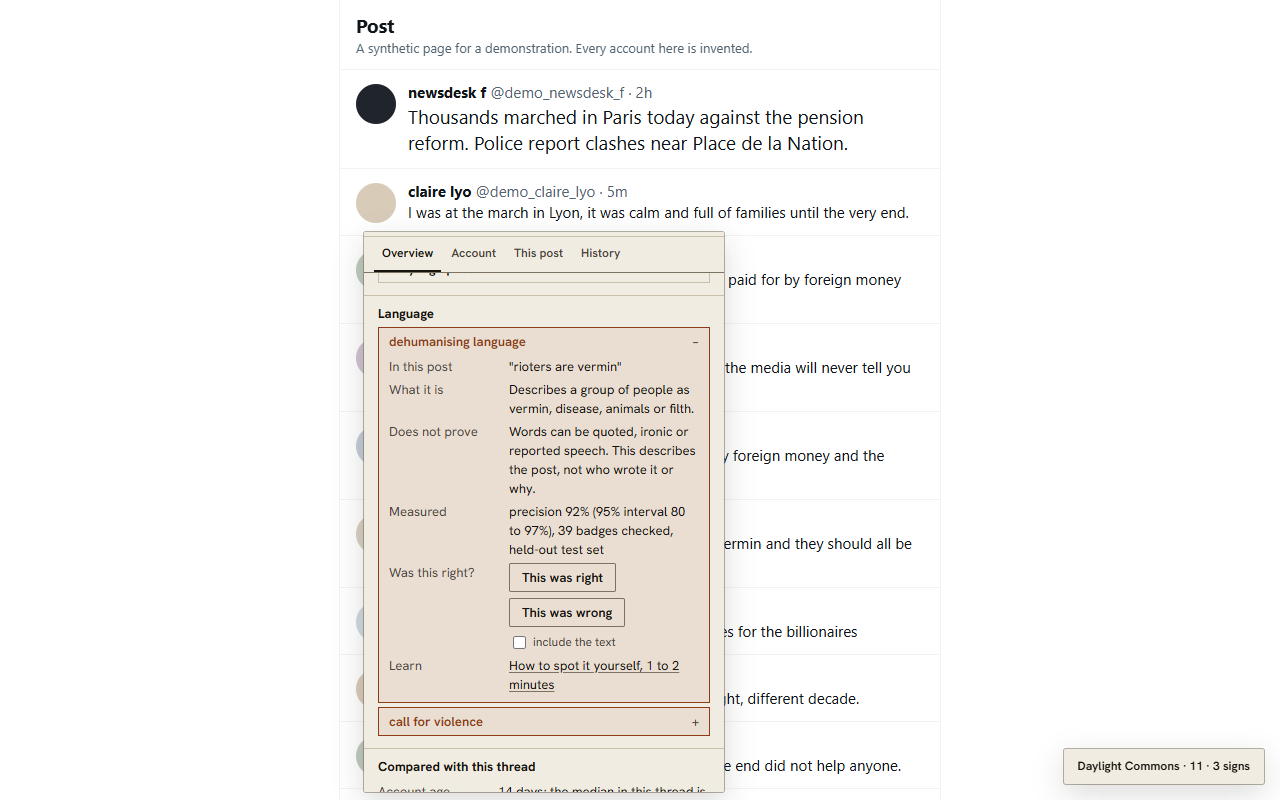
The sign describes the words in this post. A quote, a joke or a news report can match too.
Fact-checked claims
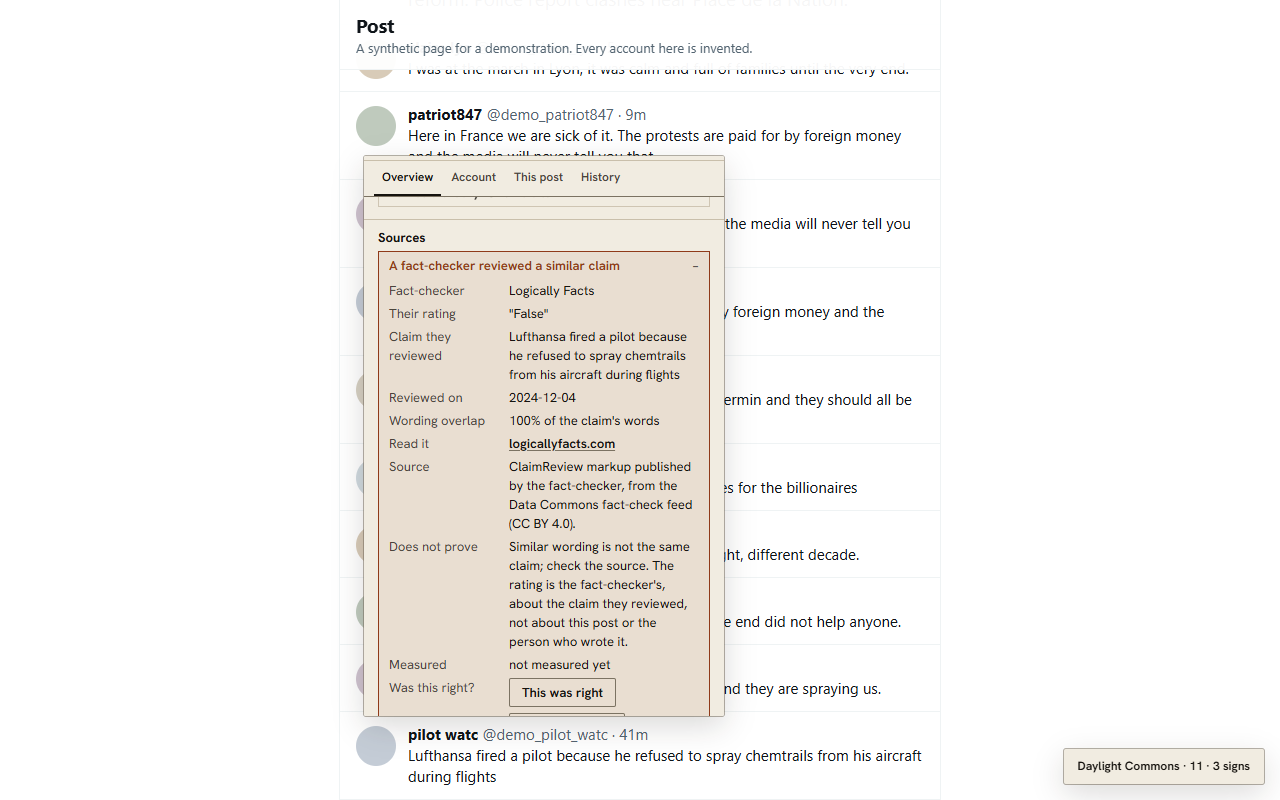
The rating belongs to the claim the fact-checker reviewed. Open their link and compare the wording with this post.
Sources
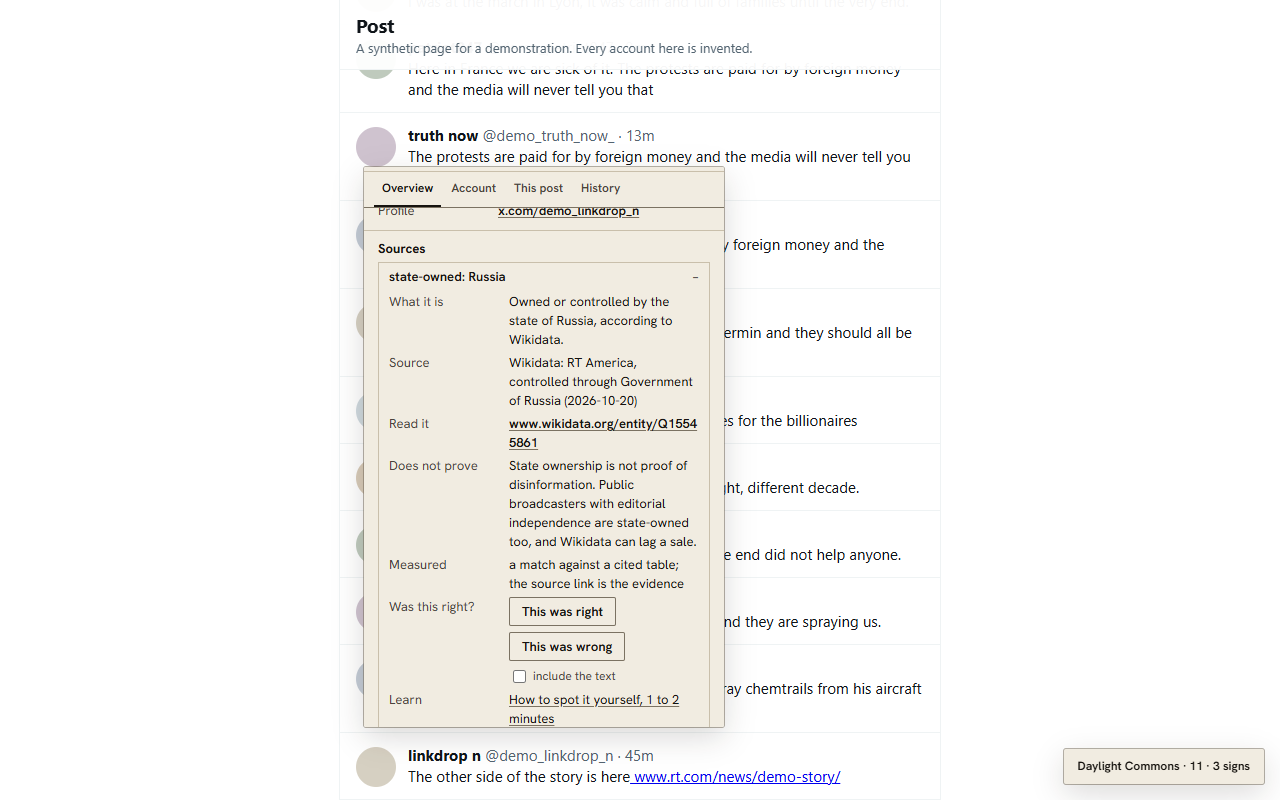
Public broadcasters with their own newsrooms count as state-owned too, and Wikidata can lag a sale.
Thread report
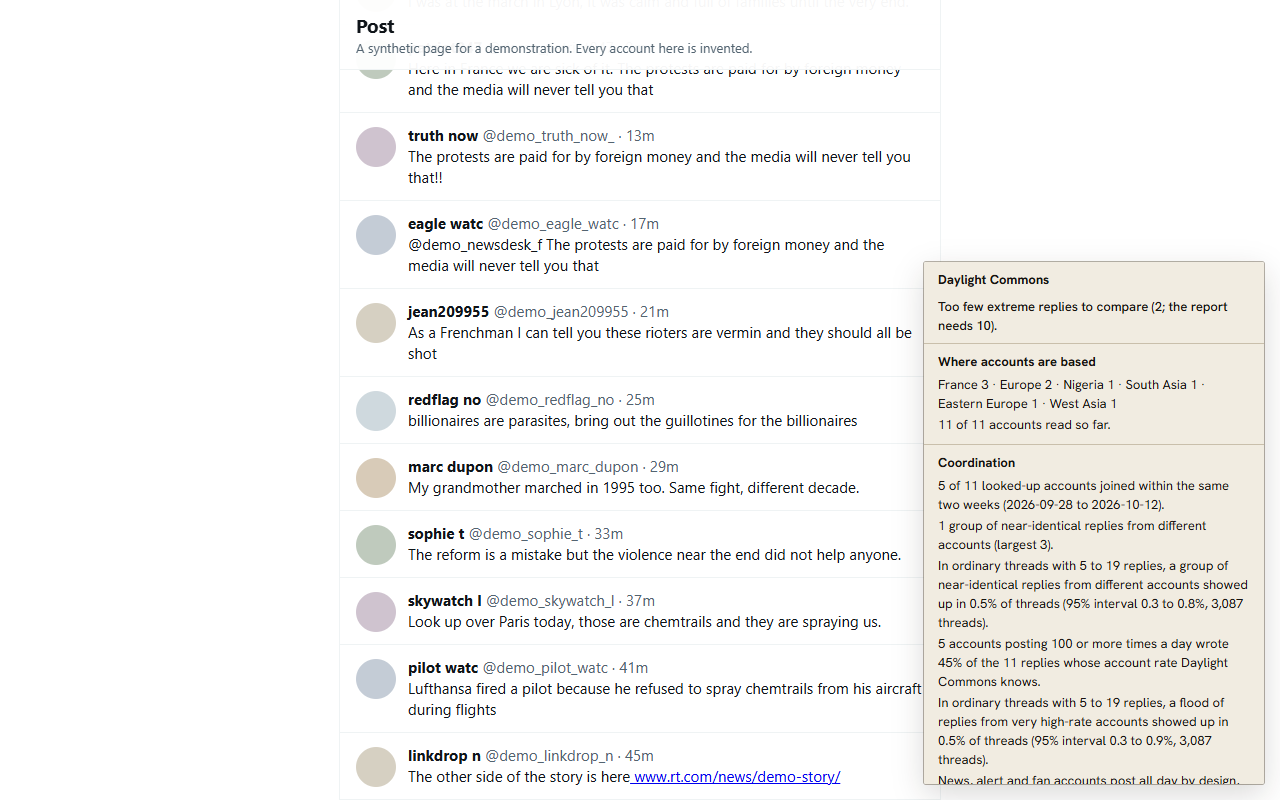
The report describes the thread as the platform ranked it. It never scores a single reply or account.
Launch campaign
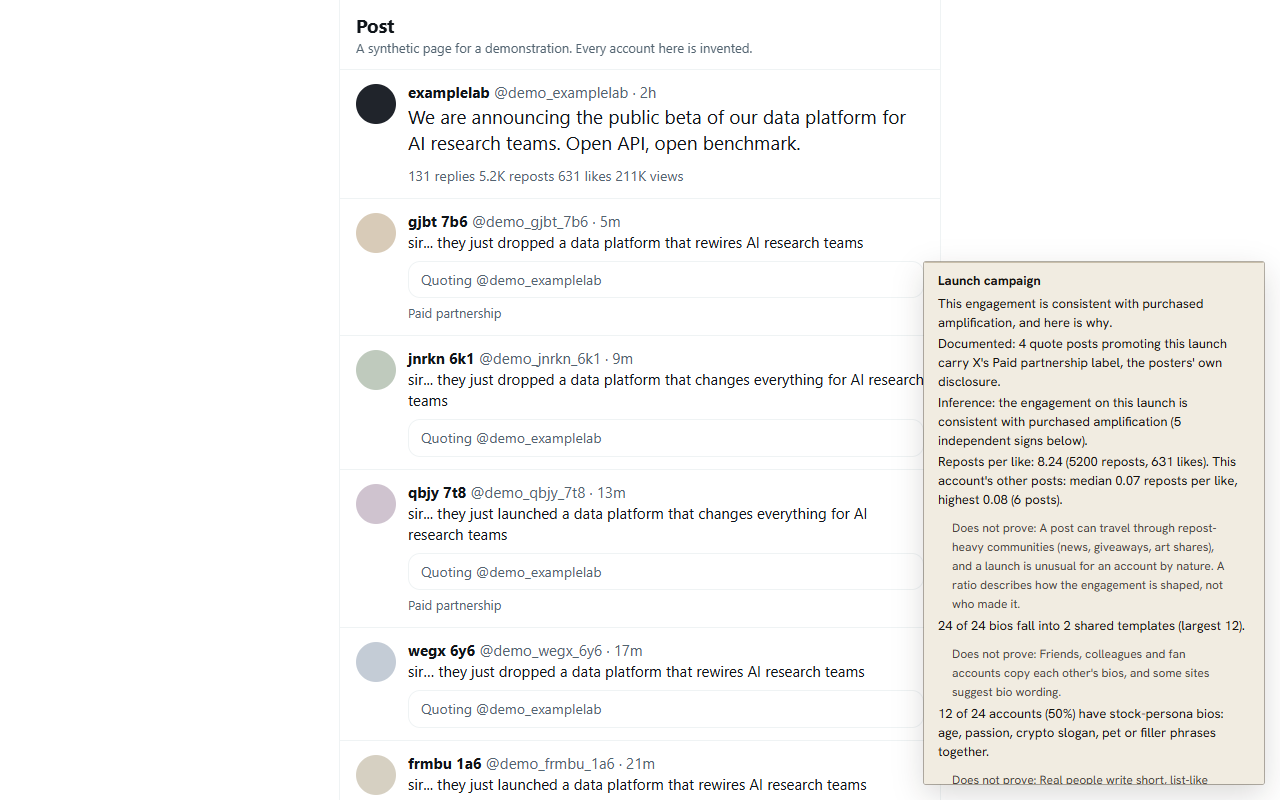
The signs describe the engagement your page loaded. Real people also write stock bios, join in waves and reshare launches.
Evidence receipts
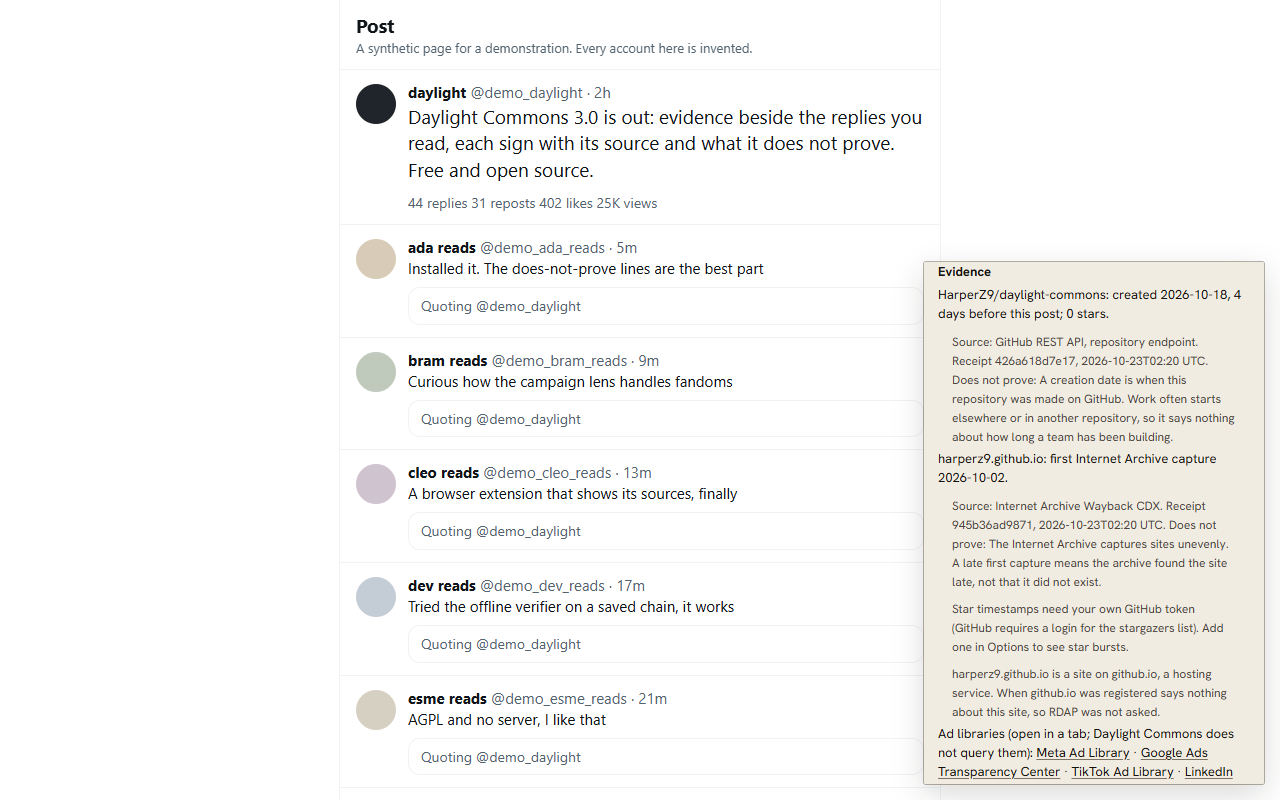
The date is when this repository appeared on GitHub. A team may have built for years before that.
Offline check
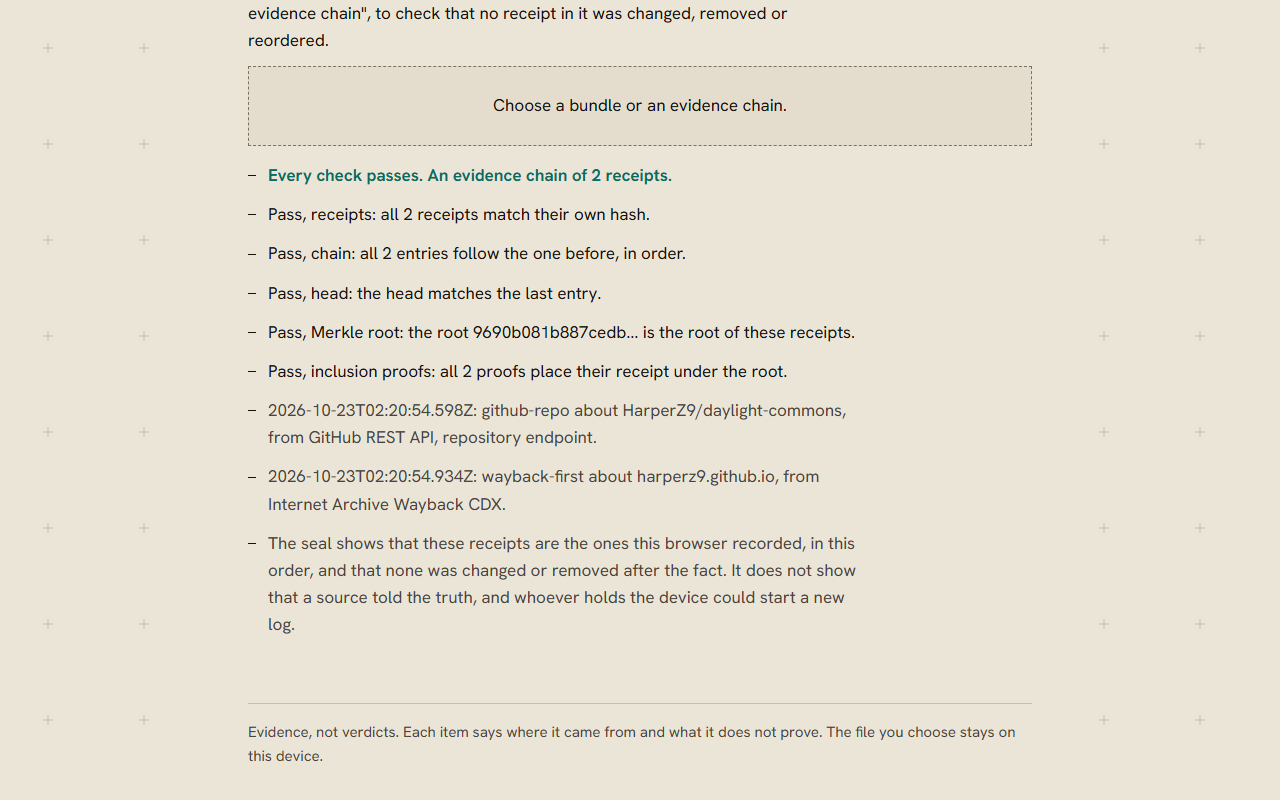
Run it on us
The recording on this page points the evidence lookup at a made-up post that links Daylight Commons' own repository and site. The answers are live: GitHub's creation date for the repository, and the Internet Archive's first capture of the site. The site sits on github.io, a shared host, so the lookup skips RDAP there. Its registration date would belong to GitHub.
Before you rely on it
- The window sees the replies the site chose to show, in the site's order.
- Platform labels follow the connection. A VPN or a trip moves them, and users can widen them to a region.
- The measurement page lists which signs have a measured precision, each with a 95% interval. The window marks every other sign "not measured yet".
- The launch campaign lens has no measured precision yet. Until a media lawyer has reviewed its wording, every claim reads "this launch" and names no company.
- A site redesign can break a reader until the next update. The extension says so when it reads nothing where replies should be.
Daylight Commons reads the site you are on. It contacts anything else only when you turn on Other coverage or evidence lookups and click. Free and open source under the AGPL-3.0.